Resistent
Wall- and ceiling-mounted unit heater, corrosion resistance for extreme application areas
- Heating
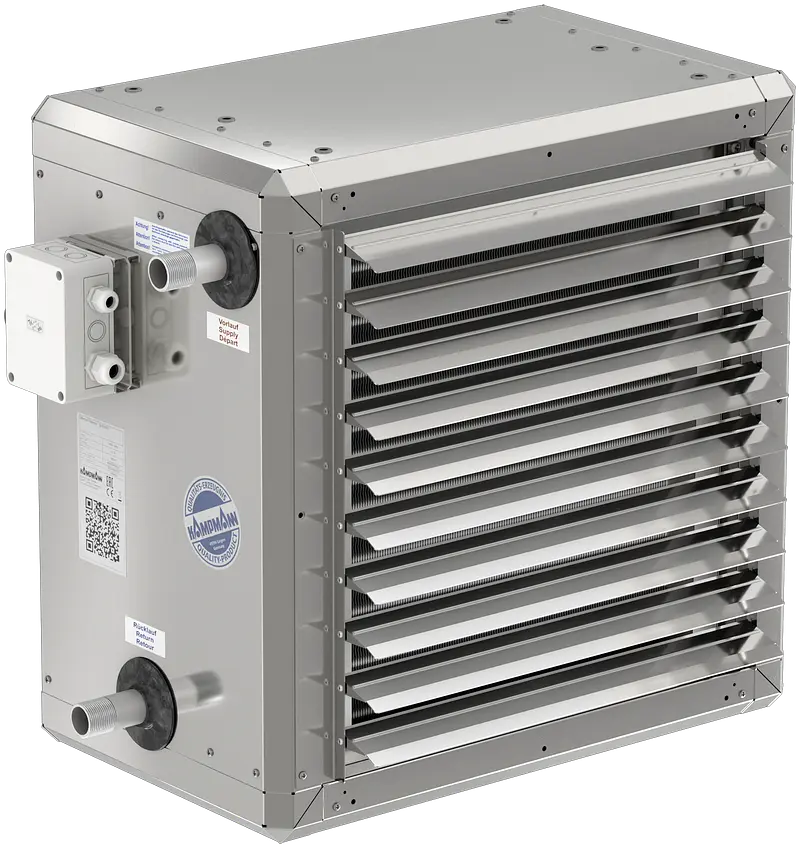
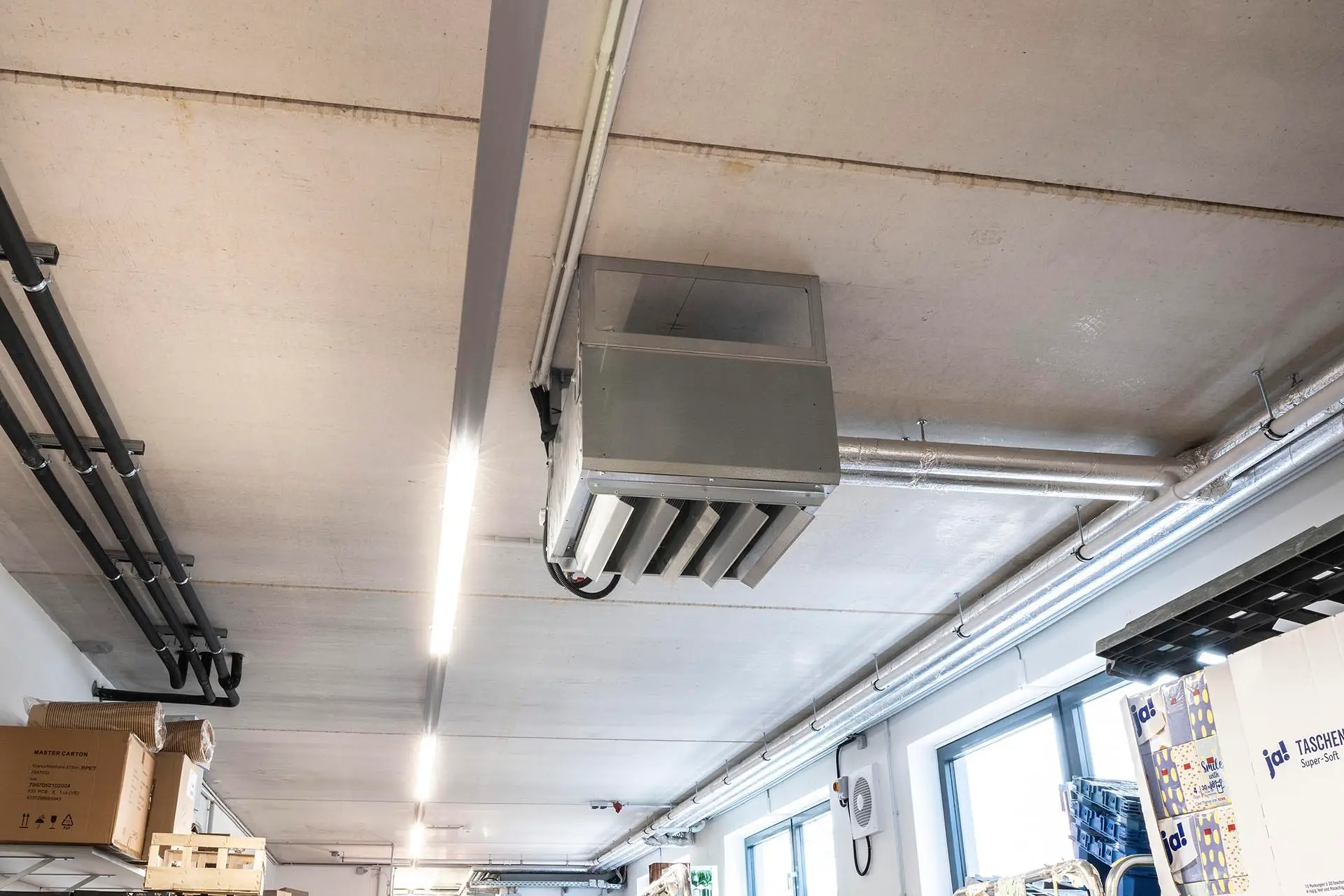
There are basically two types of heat exchanger available, which are selected depending on the application area:
Heat exchanger stainless steel V4A
Heat exchangers made entirely of V4A stainless steel are suitable for use in areas with aggressive air as well as for operation with heating media of aggressive composition.
Galvanized steel heat exchanger
This version is preferred when the room air is heavily contaminated and the heat exchanger needs to be cleaned regularly. The robust design allows mechanical cleaning.
Compared to the copper/aluminum version, the thermal output is reduced, but it offers greater resistance to external influences.
| Heat exchanger model |
|---|
| Stainless steel V4A |
| Steel dip-galvanised |
The units are available in several model sizes to allow the output to be tailored to requirements.
The model size is selected depending on the required thermal output, the air volume flow and the sound requirements of the room.
Larger model sizes offer higher performance, but are associated with larger housing dimensions, which must be taken into account when planning the installation situation.
Depending on the application area and application, variants with different heat exchanger areas and numbers of pipe rows are available. Units with a reduced heat exchanger surface area enable particularly high air volume flows and a deep air supply into large rooms. For demanding heating tasks, especially in the (operated) at low temperature range, we recommend versions with an increased heat exchanger capacity and several rows of pipes. These achieve a high heat output even at low flow temperatures and are ideal for modern, energy-efficient heating systems.
| Heat exchanger performance |
|---|
| medium |
| high |
Determination of the unit or unit size with the design criteria taking into account:
Results per page
Results per page
Page 1 of 0
Results per page
Results per page
Page 1 of 0